

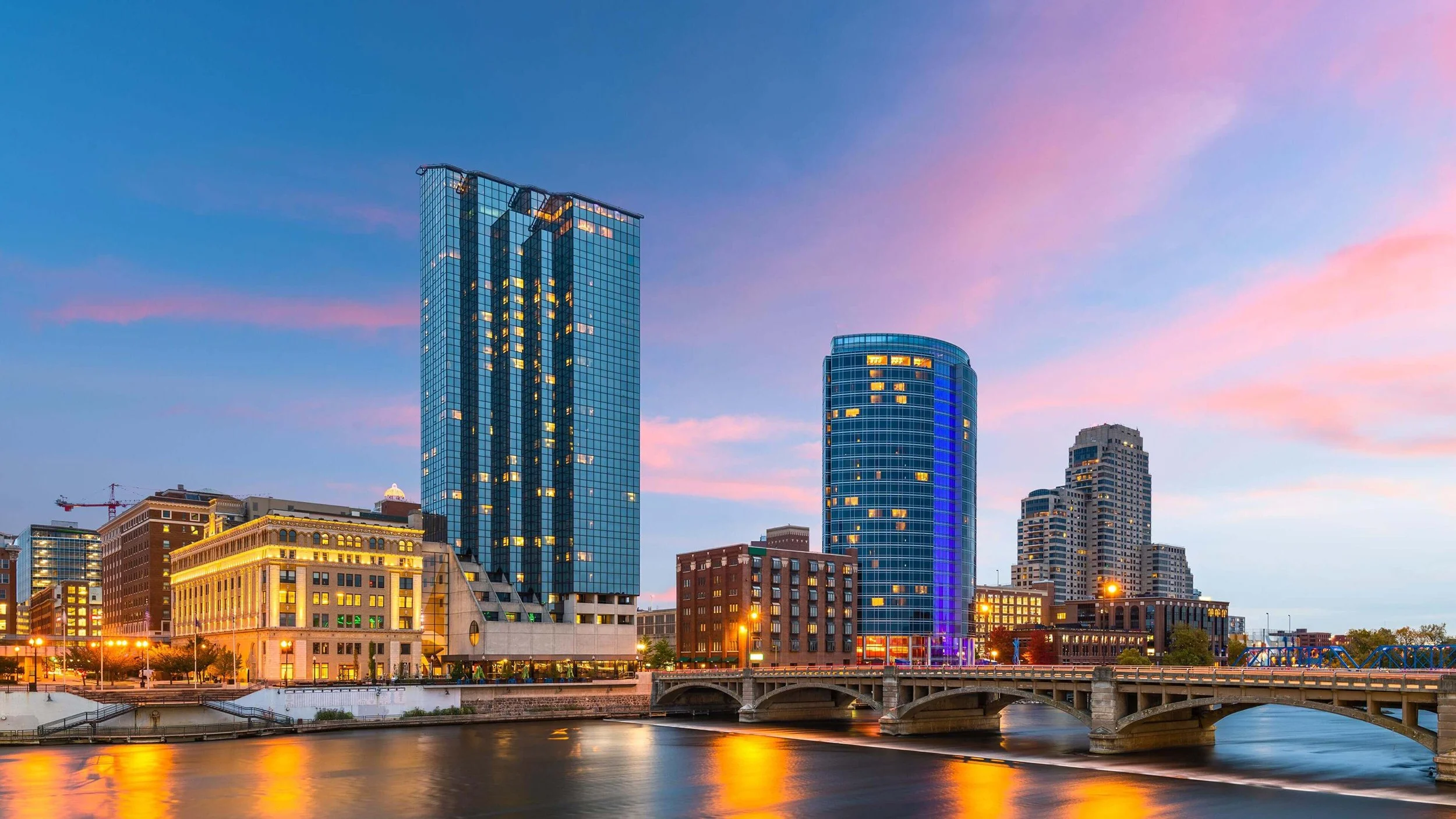
Moving to Grand Rapids
Moving to Grand Rapids: What to Know Before You Buy
Thinking about a move to West Michigan? Here's an honest local look at the neighborhoods, costs, winters, and lifestyle. The real stuff people actually ask about before they pack up and relocate.
Is Grand Rapids a good place to live?
For a lot of people, yes, and the numbers back up the buzz. In 2025 LinkedIn named Grand Rapids the #1 "city on the rise" in the country, pointing to a growing job market, a lively downtown, and the pull of Lake Michigan. It's a mid-sized city with the amenities people want, like a strong food and brewery scene, walkable neighborhoods, and parks and trails, but without the traffic and price tag of a major metro. You're about 2.5 hours from both Chicago and Detroit, and roughly 40 minutes from the Lake Michigan shoreline.
It tends to be a great fit for families, outdoor lovers, and young professionals who want a slower, more grounded pace. There are two things worth going in with eyes open about, though. The winters are gray, and building a social circle takes some real effort. More on both below, because we'd rather be straight with you.
Best neighborhoods & suburbs
Walkable & urban mid
Older homes with character, restaurants and shops you can walk to, and a younger crowd. Lots tend to be smaller and homes go fast. This is the place to be if you'd take city life over square footage.
Family-friendly with space mid
Suburban lots, newer construction, well-regarded schools, and easy 15 to 20 minute commutes downtown. This is the sweet spot for buyers around the $350 to $400k range who want room to spread out.
Upscale premium
Top-tier schools, established neighborhoods, and higher prices and taxes to match. East GR is walkable and close in, while Ada, Cascade, and Rockford give you more land a bit further out.
More affordable affordable
Where your dollar stretches the furthest, and great first-home territory. Muskegon (about 40 minutes west, right by the lake) is having a real resurgence and is worth a look if you're watching the budget.
What does it cost?
Grand Rapids is more affordable than big metros like Chicago, Denver, Seattle, or Austin. As of early 2026 the median sale price sits around $290,000 to $308,000. Roughly speaking, starter homes land in the high $200s, mid-tier homes in the mid $300s, and the high end runs past $495k.
A couple of things to factor in: property taxes can vary between municipalities, and winter heating is worth budgeting for. And outside the urban core, you'll want a car.
Yes, the winters are real
This is the number one thing locals warn newcomers about, and it's less about the snow than the gray. Grand Rapids is one of the cloudiest cities in the country, and the stretch from November through March can go a long while without much sun. If you're coming from a sunnier place, that's the part worth preparing for.
The payoff is the other three seasons. Summers and falls here are spectacular, with the lake, the trails, and Northern Michigan all an easy drive away.
Buying an older home here
A lot of the city's housing is older. Full of charm, but worth inspecting carefully. In and around the urban neighborhoods, keep an eye on roofs, windows, insulation, basements, and heating systems. Those are the things that matter most when you're getting through a Michigan winter. If low-maintenance is the priority, the suburbs have more newer construction.
One local quirk worth knowing: school district, municipality, and neighborhood don't always line up the way you'd expect. So it's smart to verify the actual school district for a specific address rather than assuming based on the mailing city.
The honest pros and cons
Pros
- Manageable, mid-sized city feel
- Lake Michigan & Northern Michigan close by
- Excellent beer, coffee & festival scene (ArtPrize, etc.)
- Strong neighborhoods with real character
- More affordable than major metros
- Less traffic; close to Chicago & Detroit
- Growing job market, LinkedIn's #1 city on the rise
Worth knowing
- Long, gray winters
- Desirable homes can move quickly
- Car-dependent outside the core
- Making friends can take some effort
- Some fields have a narrower job market
- Less diversity than larger metros
Not sure which area fits you?
Tell me what matters most to you and I'll point you in the right direction. Then we can talk through the specifics together.
Frequently asked questions
What are the best neighborhoods in Grand Rapids for newcomers?
Is Grand Rapids affordable?
What are the winters like in Grand Rapids?
Do I need a car in Grand Rapids?
What are the best suburbs of Grand Rapids?
Should I rent before buying in Grand Rapids?
What is the job market like in Grand Rapids?
Is Grand Rapids good for families?
What should I know before buying an older home in Grand Rapids?
This guide is general information for folks considering a move to the Grand Rapids area, and reflects local market conditions as of early 2026. Home prices and market data change over time. For neighborhood specifics, current listings, and advice tailored to your situation, reach out anytime.